Walls That Talk Back: Artists Turning Forgotten Buildings Into Places Worth Remembering
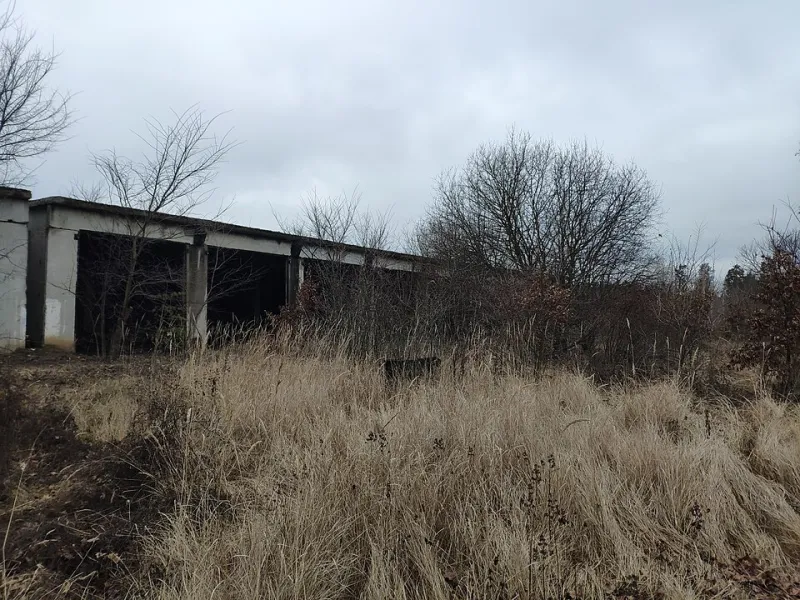
Photo: Kozaklevko, CC BY-SA 4.0, via Wikimedia Commons
The first time Solange Ferreira walked through the old Meridian Textile building on the east side of Youngstown, Ohio, she brought a flashlight and a notebook. The building had been empty for eleven years. The windows were boarded. The loading dock had become a dumping ground. Inside, the ceilings were twenty feet high, the floors were scarred hardwood, and the light that filtered through the gaps in the plywood was, she says, "the most beautiful thing I'd ever seen in a building that ugly."
Two years later, that building is the Meridian Arts Collective — a working studio space, gallery, and community event venue that hosts everything from youth painting workshops to experimental theater to a monthly flea market run by neighborhood vendors. It didn't happen with a grant or a city initiative. It happened because Solange and a group of about fifteen other artists decided to make it happen, starting with brooms and a handshake agreement with the building's absentee owner.
This is a story playing out in dozens of communities across the country right now, in buildings that range from the majestic to the mundane. And it raises questions that don't have easy answers.
The Spaces Nobody Wanted
America is full of buildings that outlived their original purpose and then just... sat. The economic forces that emptied out manufacturing towns, gutted main streets, and left rural counties with more abandoned structures than active ones didn't leave behind a cleanup plan. What they left behind was square footage — often a lot of it, often in architecturally interesting structures, almost always in communities that needed something.
Artists noticed. They tend to notice available space the way other people notice available parking: with immediate, practical interest.
In Gary, Indiana, a collective called Rust & Bloom spent three years negotiating with the city to occupy a former department store downtown. The building had been vacant since 1993. The negotiation was slow, bureaucratic, and occasionally maddening — but it worked. Today the space hosts a rotating gallery program, a printmaking studio open to the public, and a weekly community dinner. "We weren't trying to make a statement about Gary," says collective co-founder Marcus Webb. "We were just trying to make something. Gary made the statement."
Permission, Forgiveness, and the Gray Areas Between
Not every transformation starts with a signed agreement. Some start with a bolt cutter.
The ethics of occupying abandoned spaces without explicit permission are genuinely complicated, and people doing this work disagree about where the lines are. Some collectives operate under the principle of "tacit permission" — the owner hasn't said yes, but they haven't said no either, and the building is being maintained rather than damaged. Others pursue formal arrangements but acknowledge that the formal route is often inaccessible to artists who don't have lawyers or institutional backing.
"There's a class dimension to this that people don't always want to talk about," says Tamara Osei, an artist and organizer in Detroit who has worked in both permitted and unpermitted spaces. "Well-resourced arts organizations can navigate the legal infrastructure. Independent artists, community groups, people without capital — they often can't. And so the question of who gets to use space becomes a question of who already has power."
That tension shapes the conversation around these projects in ways that go beyond simple legality. It's also worth noting that many of the artists doing this work are themselves from the communities where the buildings sit — not outsiders arriving to "revitalize" a neighborhood, but residents who've watched their surroundings hollow out and decided to push back.
What Actually Gets Built
The projects that endure tend to share a few qualities. They're embedded in their communities rather than imposed on them. They involve local residents not just as audience but as participants. And they're honest about what they are — scrappy, impermanent, built on goodwill and elbow grease rather than institutional permanence.
In Tucson, a decommissioned water treatment facility became the site of a sprawling outdoor mural project organized by a loose coalition of local artists and neighborhood associations. The murals — which cover the exterior walls of several large tanks — depict the history of the surrounding community, including its Indigenous roots and its twentieth-century labor history. The project took eighteen months and involved more than sixty artists, most of them from the immediate area. The city eventually formalized its support, but the work was largely done before any official blessing arrived.
"We didn't wait for permission to tell our own story," says Lupe Armendariz, one of the project's lead organizers. "We just started telling it. The wall was there. The story was there. We connected them."
In rural West Virginia, a shuttered Pentecostal church in a town of about 800 people became an unlikely performance venue after a local musician named Clay Breckinridge spent a summer cleaning it out and repairing the stage. He started hosting acoustic shows — small, word-of-mouth affairs that drew people from surrounding counties. The church's original congregation had dissolved decades earlier, but several elderly members of that congregation have since attended performances, sitting in the same pews they'd occupied as children. "There's something about a building remembering its purpose," Clay says, "even when the purpose changes."
The Gentrification Question
It would be dishonest not to raise this. Arts-driven revitalization has a well-documented history of making neighborhoods more desirable and, in turn, more expensive — eventually displacing the very communities the arts projects were meant to serve. It's a pattern that has repeated itself in Brooklyn, in Chicago's Pilsen neighborhood, in Oakland, and in dozens of other places.
The artists doing this work are often acutely aware of the dynamic. Many are actively trying to build structures that resist it — prioritizing community ownership, keeping spaces free or low-cost, centering residents as decision-makers. Whether those efforts are sufficient is an open question, and a fair one.
What's different about many of the projects happening right now, particularly in smaller cities and rural areas, is that the gentrification risk is lower — not absent, but lower. A shuttered building in Gary or Youngstown or rural West Virginia doesn't carry the same displacement pressures as a warehouse in a major coastal city. The calculus isn't the same.
Something Worth Protecting
Solange Ferreira is careful not to oversell what she's built in Youngstown. The Meridian Arts Collective is real and it's working, but it's also fragile. The agreement with the building's owner is informal. Funding is a constant scramble. The roof needs work.
But on a Saturday afternoon when the studio is full of teenagers learning to screenprint and an older couple is examining a painting in the gallery and someone is setting up for an evening performance, the building feels like what it might have always wanted to be: a place where people make things together.
That's not nothing. In a lot of American towns right now, it might be everything.