The People Who Remember Everything: Meet America's Grassroots Memory Keepers
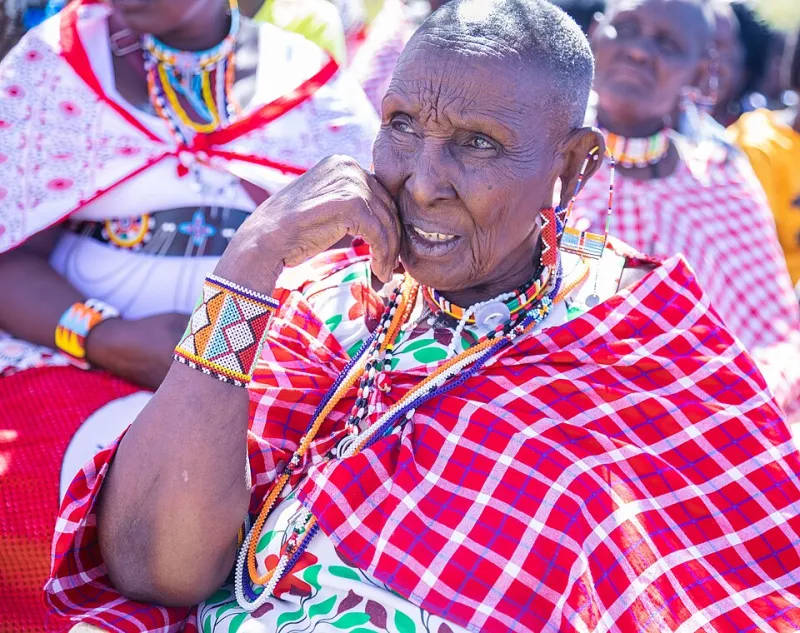
Photo: Mark Myles Mugambi, CC BY-SA 4.0, via Wikimedia Commons
Ruth Espinoza keeps her archive in three places: a fireproof box under her bed, a hard drive she backs up every Sunday, and her own head, which she describes as "the least reliable of the three." The box and the drive hold more than forty years of material — photographs, handwritten recipes with notes in the margins, cassette recordings of her grandmother and great-aunts talking about crossing the border from Mexico in the 1950s, union meeting minutes from a meatpacking plant in Dodge City, Kansas, that no longer exists. The head holds the context that makes all of it make sense.
Ruth is sixty-three years old. She has no formal training in archival science. She has never applied for a grant or published an academic paper. She is also, by any honest measure, a historian — one of thousands of people across the country quietly doing the work of preserving the parts of American history that official institutions have consistently overlooked, underfunded, or actively ignored.
These are the grassroots memory keepers. And what they're saving is irreplaceable.
What Gets Left Out
Official history has always been selective. What makes it into archives, textbooks, and museum collections reflects choices — about whose stories matter, whose experiences are considered representative, whose voices are worth preserving. Those choices have, historically, not favored working-class communities, immigrant families, LGBTQ+ people in small towns, Indigenous communities outside major research centers, or the everyday textures of life that don't register as "significant events."
The gaps aren't accidental. They're structural. Formal archives require resources — physical space, trained staff, acquisition budgets, institutional relationships. Communities without those resources have always had to find other ways to hold onto their own histories, or watch them disappear.
What's changed in recent years is partly technological — digital recording, cloud storage, and social media have made it easier and cheaper to collect and share material — and partly cultural. There's a growing recognition, in and outside academia, that the histories being preserved by people like Ruth Espinoza are not supplementary to "real" history. They are history. Often the most honest kind.
Kitchen-Table Methods, Serious Results
The tools these archivists use are as varied as the communities they're documenting.
In Biloxi, Mississippi, a retired school librarian named Josephine Tran has spent the past decade collecting oral histories from Vietnamese-American fishing families along the Gulf Coast — a community that rebuilt after Katrina, survived the BP oil spill, and has largely been absent from both disaster narratives and local historical records. Her method is simple: she shows up, she listens, she records on her phone, and she transcribes everything herself at her kitchen table. She's accumulated more than 200 hours of testimony. A regional university recently approached her about partnering on a formal archive. She's thinking about it carefully.
"I want to make sure the community keeps control," she says. "These are people's lives. I don't want them to end up in a database somewhere that nobody from Biloxi can actually access."
That concern — about who controls the archive, who can reach it, who benefits from it — comes up repeatedly among grassroots historians. The relationship between community-based archivists and formal institutions is complicated, sometimes generative and sometimes extractive. The best partnerships are the ones where the community sets the terms.
LGBTQ+ Histories in Unexpected Places
One of the most urgent and underappreciated areas of grassroots preservation work is happening in communities where LGBTQ+ history has been actively suppressed or simply never acknowledged.
In a mid-sized city in rural Tennessee — the subject asked us not to name the specific location — a group of about a dozen people has been quietly collecting oral histories from LGBTQ+ residents who came of age in the area over the past fifty years. The project started because one of the founders, a woman in her late forties named Claire, realized that when older members of her community died, their stories died with them. No one was writing them down. No one was asking.
"There's this assumption that queer history is a city thing, a coastal thing," Claire says. "But we've always been here. We've always had lives worth documenting. We just had to do the documenting ourselves."
The group meets monthly, sometimes in living rooms, sometimes at a sympathetic local church. They've recorded more than sixty interviews. They maintain a private digital archive and are working on a public-facing project that will share selected stories with appropriate protections for people who aren't ready to be identified publicly.
Recipes as Documents
Not all preservation work looks like oral history. Some of the most creative grassroots archivists are working with material that doesn't immediately read as historical: food.
In Chicago's Pilsen neighborhood, a community organization called Cocina Memoria has spent three years collecting recipes from elderly Mexican and Mexican-American residents — not just the recipes themselves, but the stories attached to them. Who taught you this dish. What it tasted like before the ingredients changed. What you made it for. The project has produced a self-published cookbook that is, simultaneously, a social history of immigration, assimilation, labor, and love.
"A recipe is a document," says the project's founder, Beto Villanueva. "It tells you about migration routes, about what was available and what wasn't, about what people held onto when they had to leave everything else behind. If you know how to read it, it's as rich as any written record."
Similar projects are happening with quilts in Appalachia, with blues recordings in the Mississippi Delta, with letters and photographs in Somali-American communities in Minneapolis and Columbus, with labor movement ephemera — buttons, handbills, strike photographs — in former steel towns across Pennsylvania and Ohio.
The Race Against Time
There's urgency underneath all of this work, and everyone doing it feels it. The people who carry these histories in their bodies and their memories are getting older. The objects — the letters, the photographs, the cassette tapes — are deteriorating. The window for capturing certain kinds of firsthand testimony is closing.
Ruth Espinoza knows this better than most. Her grandmother, who was one of her primary sources, died four years ago. "There are things I should have asked her that I didn't," Ruth says quietly. "Questions I didn't know to ask yet. That's just how it goes. You do what you can."
What she can do — what all of these people are doing — is remarkable. Without institutional support, without formal credentials, without anyone telling them their work matters, they are building the archive that mainstream history forgot to make.
Somebody has to. They decided it would be them.
Are you a community archivist or oral historian working to preserve local history? We'd love to feature your work. Reach out to us at Bonnie Clac.