Curtain Call for the Heartland: The Community Theaters Holding America's Stories Together
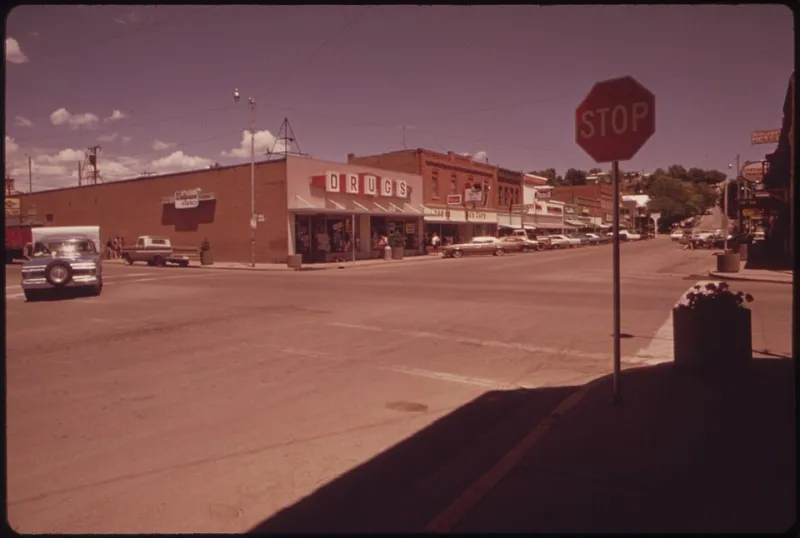
Photo: David Hiser, Public domain, via Wikimedia Commons
There's a moment, right before the house lights go down in a small-town theater, that feels almost sacred. The seats are filled with people who recognize each other — the pharmacist in row three, the high school art teacher near the back, the retired postal worker who's been coming since 1987. The person about to step onstage probably bags their groceries or coaches their kid's soccer team. And yet, when that curtain rises, something genuinely magical happens.
Community theater doesn't get a lot of national press. It doesn't have publicists or premiere parties. But if you want to understand what American culture actually looks like when it's not filtered through a studio executive's spreadsheet, you need to start paying attention to these places.
More Than a Stage — A Town's Living Room
Take the Millbrook Players in a small river town in upstate New York. Founded in 1962 by a group of schoolteachers who thought their community deserved more than a two-hour drive to Albany for live theater, the group has staged everything from Tennessee Williams to locally written one-acts about the town's own history. Artistic director Carla Mendez, who took over in 2018, puts it plainly: "We're not competing with Broadway. We're doing something Broadway literally cannot do — we're telling this town's story, to this town's people."
That distinction matters more than it might seem. National entertainment culture, for all its reach, has a way of flattening regional identity. What community theaters preserve is specificity — the dialect, the local legend, the particular grief of a factory closing or the shared joy of a long-awaited downtown revival. These are stories that don't trend on social media but live in the marrow of a place.
Training Grounds That Don't Cost $60,000 a Year
One of the quieter, more transformative roles community theaters play is as incubators for emerging talent — without the gatekeeping of conservatory programs or the financial weight of a formal arts education.
Marcus Tilley grew up in rural Georgia. The nearest city with a professional theater company was a 90-minute drive, and the idea of moving to New York to study acting felt as distant as the moon. But the community theater in his hometown gave him his first real stage at age 14. By 22, he was directing their summer production. Now in his early 30s, he's a working playwright whose debut piece premiered at a regional festival in Atlanta last year.
"That little theater taught me everything I know about how stories land with real audiences," he says. "Not critics. Not industry people. Actual humans who are laughing, or crying, or checking their phones because you lost them. You learn fast."
This kind of on-the-ground training — messy, real, immediate — is something no MFA program can fully replicate. And it's happening in church basements, repurposed storefronts, and converted warehouses in communities that rarely make it onto anyone's cultural map.
When the Audience Is Also the Cast
Perhaps the most radical thing about community theater is its fundamental blurring of the line between performer and spectator. In most entertainment contexts, there are creators and consumers. In a community theater production, those categories collapse in the best possible way.
Long-time patron Dorothy Reyes has attended nearly every production at her local theater in central Ohio for the past 22 years. Three years ago, at age 67, she finally auditioned. She played a supporting role in a production of The Diary of Anne Frank and describes the experience as one of the most meaningful of her life.
"I'd spent decades watching other people be brave on that stage," she says, laughing. "Turns out, my neighbors were just waiting for me to show up."
That sense of open invitation — the idea that the stage belongs to everyone willing to try — is what separates community theater from almost every other cultural institution. Museums can feel intimidating. Concert halls can feel expensive. But a community theater audition notice posted at the library? That's a door almost anyone can walk through.
Surviving on Passion and Potluck Dinners
Let's be honest: none of this is easy to sustain. Most community theaters operate on shoestring budgets, relying on a combination of ticket sales, local business sponsorships, and the kind of volunteer labor that only happens when people truly love something. Set construction happens on weekends. Costumes get sewn at kitchen tables. Directors often work for free or close to it.
The pandemic hit these organizations especially hard. Without endowments or federal bailouts, many smaller theaters shuttered temporarily — and some didn't reopen. The ones that survived did so largely because their communities refused to let them go. Fundraisers, GoFundMe campaigns, "ghost audience" livestreams — people got creative because they understood what was at stake.
"We didn't just lose a place to see shows," says Mendez of the Millbrook Players, reflecting on the two years her theater went dark. "We lost the place where we figured out who we were as a town."
Why This Matters Right Now
In a cultural moment defined by algorithmic content and parasocial relationships with celebrities, community theater offers something almost countercultural: genuine human presence, shared physical space, and stories told by people who actually know your name.
There's a progressive case to be made here, too. Community theaters are often among the most inclusive creative spaces in their towns — places where queer stories get told, where immigrant experiences get staged, where working-class narratives aren't an afterthought but the main event. They do this not because a diversity consultant told them to, but because the community they reflect is genuinely diverse.
If you haven't been to your local community theater recently, consider this your nudge. Buy a ticket. Bring a neighbor. Stick around after the show and tell the cast they were wonderful — because they were, and because they need to hear it.
The stories being told on those small stages are American stories. And they deserve a full house.