Before the Last Witness Is Gone: The Urgent Case for Recording Your Neighborhood's Stories
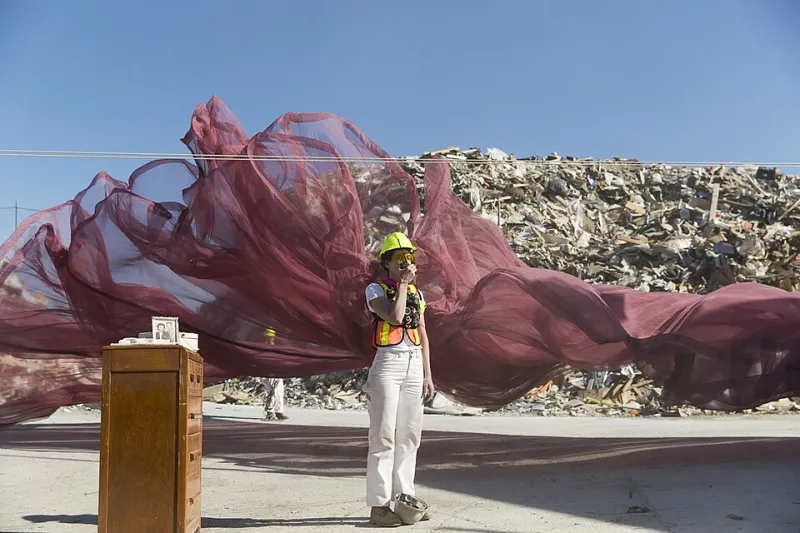
Photo: Martha McDonald and Ryan Collerd, CC BY-SA 4.0, via Wikimedia Commons
Somewhere in your neighborhood right now, there is an older person sitting on a porch, or waiting for a bus, or watching the news with the volume too loud, who holds inside them a story you will never hear unless you ask.
Maybe they remember when this block was a different kind of place — more dangerous, or more vibrant, or both at once. Maybe they were here for the strike, or the fire, or the summer when the whole neighborhood came together to fight a highway that was going to cut the community in half. Maybe they just remember what it felt like to be young in this particular place, at this particular time, in a way that no historical record will ever quite capture.
That story is not on Wikipedia. It is not in the city archive. It exists in exactly one place: inside a living person. And living people, as we are all uncomfortably aware, do not last forever.
What We Lose When We Don't Ask
Oral history — the practice of recording firsthand accounts of lived experience — has been a cornerstone of cultural preservation for as long as humans have had language. But in an era of digital distraction and accelerating change, the informal transmission of community memory has broken down in ways we're only beginning to reckon with.
Gentrification displaces longtime residents before their stories can be captured. Pandemics take elders faster than we expect. Families scatter across the country and the conversations that used to happen at Sunday dinners simply... stop happening. The result is a kind of cultural amnesia that affects communities unevenly — and almost always hits hardest in places that were already marginalized by official histories.
Black neighborhoods. Indigenous communities. Working-class enclaves. Immigrant communities. These are the places where oral tradition has always carried the most weight precisely because official records were never reliably kept — or were kept by people with very different interests. When that living memory is lost, it is not replaced by anything. It is simply gone.
This is not a small thing. It is a wound in the fabric of a place.
You Don't Need to Be a Historian
Here's where I want to push back against a particular kind of paralysis. A lot of people recognize the importance of preserving community stories in the abstract but feel unqualified to actually do it. They imagine oral history as a formal academic discipline requiring special training, expensive equipment, and institutional backing.
It isn't. Or rather, it doesn't have to be.
Story Corps, the national nonprofit that has collected hundreds of thousands of personal narratives since 2003, built its entire model on the radical premise that anyone can be an interviewer, and that every life contains a story worth preserving. Their recording booths have been visited by truck drivers, teenagers, immigrants speaking through translators, and grieving parents — none of them historians, all of them capturing something irreplaceable.
Your phone has a voice memo app. That is genuinely all you need to start.
A Practical Guide to Getting Started
Find your first subject close to home. The best place to begin is with someone you already have a relationship with — a grandparent, a longtime neighbor, the owner of a business that's been on the same corner for 40 years. Trust makes for better interviews. People share more freely with someone they feel comfortable around.
Ask open-ended questions and then stop talking. The most common mistake new interviewers make is filling silences. Don't. "What do you remember about this neighborhood when you first moved here?" is a question. Everything after that is listening. Resist the urge to redirect or summarize. Let people find their way to the thing they actually want to say.
Focus on the specific, not the general. "What was it like growing up in this town?" will get you a polite, somewhat vague answer. "Can you describe a typical Saturday morning when you were ten years old?" will get you something alive. Specificity unlocks memory in ways that broad questions don't.
Ask about objects, places, and sensory details. "Is there a place in this neighborhood that doesn't exist anymore that you miss?" "What did the old bakery smell like?" "Do you still have anything from that time?" These questions bypass the part of the brain that edits for importance and reach the part that actually remembers.
Don't wait for the perfect setup. A kitchen table conversation recorded on a phone is infinitely more valuable than a perfectly produced interview that never happens because you were waiting for the right microphone.
What to Do With What You Collect
Recording a story is only the beginning. The next step is making sure it doesn't just sit on your hard drive until your own hard drive dies.
Local libraries are often eager to receive oral history donations — contact your branch and ask about their community archive program. Many already have one. If yours doesn't, that's an opportunity to help start one.
Local historical societies are another natural home for this kind of material. So are community centers, neighborhood associations, and school libraries. A digitized recording with a basic transcript can live in multiple places at once, which is exactly what you want.
If you're more digitally inclined, platforms like SoundCloud or even a simple podcast feed can make community stories publicly accessible in a way that a library archive alone might not. Some neighborhoods have started Instagram accounts or YouTube channels specifically for this purpose — short clips from longer interviews, shared with permission, reaching people who would never walk into a historical society.
The format matters less than the intention. The intention is: this story exists, it deserves to be heard, and I am going to make sure it outlasts the person who told it.
This Is an Act of Love
I want to end by saying something that doesn't usually make it into the practical guides: recording your community's stories is, at its core, an act of love.
It says to someone: your life mattered. What you witnessed mattered. The way you experienced this particular corner of the world is worth preserving. It pushes back against the cultural message that only famous people's stories deserve to be told, that ordinary lives are too small for the archive.
They are not too small. They are the archive.
Bonnie Clac exists because we believe that art, stories, and culture live in communities — not just in institutions or on platforms or in the hands of credentialed gatekeepers. The stories on your block are part of that. The people who hold them are part of that.
Go ask someone what they remember. Bring your phone. Press record.
Do it before the last witness is gone.