The Kids Hang the Show Now: Teen Curators and the Towns That Trusted Them
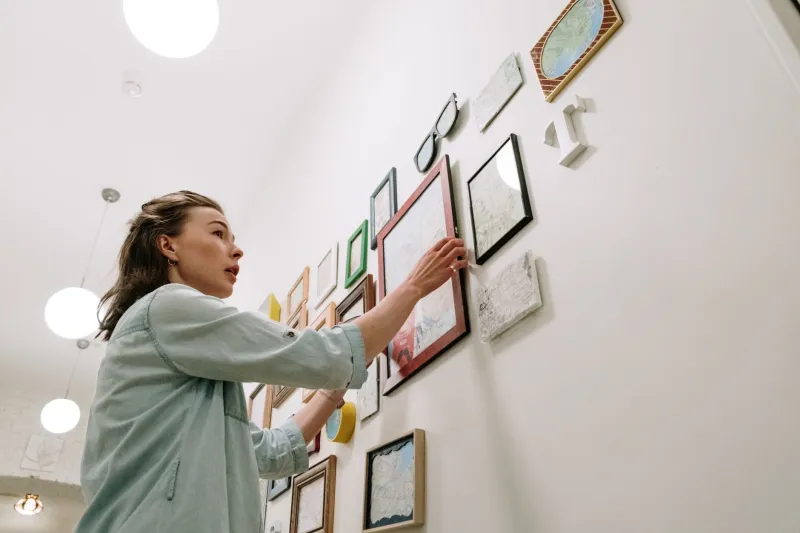
The show was called Things We Don't Say at Dinner, and it was hung by four high schoolers in a converted storefront gallery on a main street that has exactly one traffic light. The wall text was handwritten. The playlist for opening night was, by the director's own admission, "louder than anything this building has ever played." Three hundred people came. For a town of 4,800, that's a parade.
This is not an isolated story. Across the country, small arts centers and community galleries — often run on a shoestring by two part-time staffers and a board of retirees — have been experimenting with a simple, slightly terrifying idea: give the curatorial keys to local teenagers and see what happens.
A Key, Not a Field Trip
There's a difference between a youth art show and a youth-curated show, and it's the difference between being invited to the party and booking the band.
The traditional model is familiar: adults organize an annual student exhibition, teens submit work, a teacher helps hang it, parents take photos, everyone goes home. Fine, but the agenda belongs to the adults. The teens are content.
The new model hands over the actual decisions: the theme, the artist call, the acceptance process, the sequence of works on the wall, the labels, the event itself. Adults stay in the room as a safety net and a budget line. That's it.
"We had to sit on our hands," one gallery director in the upper Midwest said of the first year. "The kids wanted to put a piece at the very back of the room, behind a doorway, so you had to go looking for it. Every instinct I had said no. It ended up being the piece people talked about most."
What Teenagers Pick When Nobody's Watching
The shows tend to be braver than adult-curated community exhibitions, and the reasons aren't mysterious. Teens have less to lose and less practice being polite about it.
Common themes: bodies and body image, grief, money, religion, the specific claustrophobia of a small town, and the strange tenderness teenagers feel for the same small town they can't wait to leave. One gallery's teen council built an entire exhibition around the school parking lot — as a subject, as a social map, as a place where things happen that adults never hear about.
You'll also see an appetite for mediums the adults might have written off as unserious. Nail art. Tattoo flash. Skate deck graphics. Screenshots. Crochet and fan art displayed with total sincerity and no wink. When you're seventeen, the hierarchy that puts oil painting above a hand-painted pair of sneakers hasn't fully set in yet. That's a feature.
The Wall Label Problem
Labels are where the trust gets tested, because labels are where a curator explains the work, and explaining requires a voice.
Adult-run shows in community spaces tend to write labels in the institutional register: medium, dimensions, a short bio, maybe a polite sentence of interpretation. Teen curators, given permission, produce something closer to a group chat with footnotes. One label read, in full: Acrylic on canvas. She made this in the parking lot behind the funeral home because it was the only place with good light. It's about her grandpa. Please don't touch it, it's still tacky.
Some directors flinched. Most came around, because visitors read those labels. All the way through. Twice. Attendance-grade evidence that plain language and specificity beat critical distance every single time — a lesson community galleries should probably tape to the inside of their office doors.
The Friction Nobody Warned Them About
It isn't frictionless, and the organizers are honest about where it pinches.
Speed. Teens work in intense bursts around sports seasons, finals, and jobs. Adult staff used to six-month planning horizons have to compress and let go of the timeline.
The taste gap. Sometimes a teen-curated show includes work adults find crude, or excludes work adults find important. A beloved local painter doesn't get in. Someone's mother calls. The gallery has to hold the line, gently, and explain what curating is.
Safety. Any program putting minors in a public-facing role needs real guardrails: a staff member present, group decisions on anything with identifying details, consent from the artists, no names attached to work about family conflict unless the maker chooses.
The optics problem. A town can be genuinely proud of its teen curators and still have a commenter on the local Facebook group call it a gimmick. Directors learn to let the opening-night crowd answer that one.
Opening Night Belongs to the Parking Lot
Ask anyone who's been to one of these openings and they'll tell you the same thing: the crowd spills outside. Teens bring friends who have never set foot in a gallery. Parents come. Grandparents come. Younger siblings run laps. A kid's band plays on the sidewalk because the room can't hold the sound.
That's the intergenerational part nobody plans for. A retired teacher sees a fourteen-year-old's installation about loneliness and writes her a note. A farmer stands in front of a photograph of his own field taken by a student he's never met. The wall stops being the gallery's wall and starts being the town's.
Trust Is a Two-Way Exhibit
None of this requires money. It requires an adult willing to hand over an actual decision and then defend it in public. In a country that talks endlessly about young people's disengagement from civic life, this is one of the few cheap, proven, repeatable fixes: put their work on the wall, then put them in charge of the wall.
The show comes down in six weeks. The kid who chose the theme comes back next year as a mentor. That's the exhibit that stays up.