Living Room Curtain Call: The Families Bringing Real Theater to Your Block
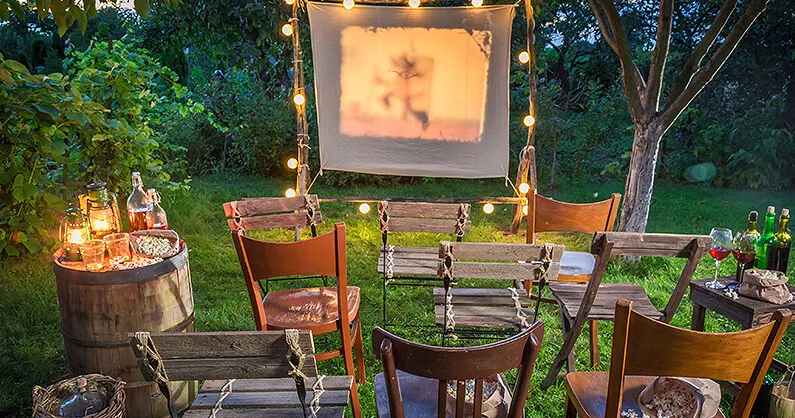
Photo: backyard outdoor theater performance folding chairs string lights neighborhood, via www.crjdesignerhomes.com.au
The folding chairs are a little wobbly. The lighting rig is a string of Edison bulbs borrowed from a neighbor's patio. Someone's golden retriever keeps wandering through the set. And the audience — maybe thirty people crammed onto mismatched lawn furniture — is absolutely riveted.
This is theater in America right now. Not all of it, sure. But a growing, buzzing, beautifully scrappy slice of it.
Across the country, families and small collectives are ditching the institutional stage and making performance happen in the most personal spaces imaginable: their own homes. Basements, backyards, converted garages, front porches — these are the new black boxes. And the people filling those folding chairs aren't doing it out of obligation. They're coming back, show after show, because something about this feels real in a way that a ticketed, air-conditioned theater downtown sometimes doesn't.
Why the Living Room?
Ask any of these grassroots theater-makers why they chose hyper-local venues over traditional stages and you'll get answers that are practical, philosophical, and sometimes a little defiant.
In Decatur, Georgia, Marisol Vega and her sister Claudia started staging short plays in their parents' backyard about four years ago. What began as a pandemic project — something to do, something to make — turned into a full community ritual. They call themselves the Porch Light Players, and they've produced everything from original ten-minute comedies to a stripped-down adaptation of A Raisin in the Sun that had neighbors crying in their camp chairs.
"The traditional theater space carries a lot of baggage," Marisol says. "Who it's for. Who can afford it. Who gets to tell stories there. When you're in somebody's backyard, all of that falls away. People relax. They bring food. They heckle a little. It becomes a conversation instead of a performance."
That blurring of the line between performer and audience is something you hear again and again in these spaces. In Missoula, Montana, a collective called Below the Stairs (named, literally, for the basement where they rehearse) has been producing original work for three years. Co-founder Derek Huang describes their approach as "theater without permission." No grants to apply for, no board to report to, no artistic director deciding whose vision matters.
"We just make the thing," Derek says. "And then we invite people over."
The Audience Finds You
One of the unexpected discoveries for many of these groups is that finding an audience is easier than they feared — and more organic than anything a marketing campaign could manufacture.
Word-of-mouth is the engine here. A neighbor mentions it at the hardware store. Someone posts a handwritten flyer at the coffee shop. A text goes out to forty people, and thirty of them actually show up because it's close, because it's free or nearly free, and because the person inviting them is someone they actually know.
In Binghamton, New York, a family collective called The Attic Company — yes, they perform in an attic — has developed a genuine following of regulars who treat each new production like a neighborhood event. Founding member Patricia Osei says the intimacy changes how audiences receive the work.
"When you're six feet from the actors, you can't zone out," she says. "You're in it. You feel responsible for it somehow. I've watched people laugh at things they never would have laughed at in a bigger space, and I've watched people completely break down."
That emotional directness is part of what's driving the movement. In an era of mediated everything — streaming content, algorithmically curated feeds, parasocial relationships with performers we'll never meet — there's something almost radical about sitting in someone's backyard and watching their neighbor perform a monologue about grief or joy or the particular loneliness of a Tuesday afternoon.
Democratizing the Craft
These spaces aren't just venues. They're training grounds.
Because the barrier to entry is low, people who might never audition for a community theater — let alone a professional one — are finding their way onto these makeshift stages. Kids who are too nervous for the school play. Adults who always wanted to try but figured the ship had sailed. First-generation immigrants telling stories in languages that rarely appear in mainstream theater.
The Porch Light Players in Decatur have made a point of casting broadly and writing specifically. "We write about our neighborhood," Claudia Vega says. "About the people on our street, the issues in our schools, the things we're all going through. And then we cast whoever wants to be in it. The result is something that could not happen anywhere else. It is, like, chemically specific to this block."
Below the Stairs in Missoula has taken a similar approach, workshopping new scripts with community members who have no theatrical training. Derek Huang sees this as the whole point. "Theater has always been a community art form," he says. "It got formalized and professionalized and gatekept somewhere along the way. We're just walking that back a little."
What This Reveals About All of Us
There's something worth sitting with in the popularity of these underground stages. We are, apparently, hungry for stories told close up. We want to be in the room — the actual, physical room — where something is happening. We want to know the people making it, to see the effort in their faces, to feel the stakes.
This isn't a rejection of professional theater. Most of the people running these backyard collectives love professional theater. But they're filling a different need, one that a polished production in a downtown venue can't quite touch.
As Marisol Vega puts it, leaning back in her own backyard where the Edison bulbs are already strung up for next month's show: "People want to feel like they belong to something. Like the story is theirs too. That's easier to do when you're literally in someone's home."
The folding chairs are still a little wobbly. The dog will probably wander through again. And the audience will be back, every single time.