Before the Recipe Is Lost: How Immigrant Families Are Cooking Their Way Back to Themselves
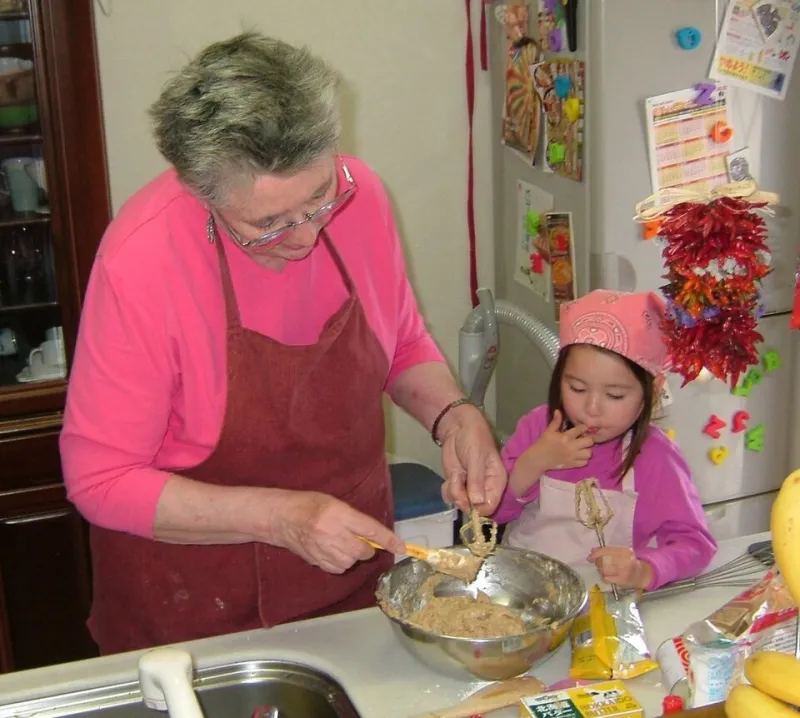
Photo: Gaijin Biker(Big Ben), CC BY-SA 2.0, via Wikimedia Commons
The recipe doesn't exist. Not in any book, not on any website, not in any app. It lives in the hands of a seventy-three-year-old woman in a Houston apartment, in the way she pinches the dough without measuring, in the particular motion she uses to press the filling closed — a gesture she learned from her own mother in a kitchen four thousand miles away.
Her granddaughter, Amara, is filming everything on her phone. She's been doing this every Sunday for six months.
"I realized I had no idea how to make any of this," Amara says, gesturing at the spread of ingredients across her grandmother's counter. "And I realized that if I didn't learn now, it would just be... gone. Like it never existed."
What Amara is doing in that Houston apartment is happening in kitchens across the country, in dozens of languages, with hundreds of dishes. And it's grown from a quiet family act into something that looks a lot like a movement.
The Urgency of the Ordinary
Food historians will tell you that culinary knowledge is among the most fragile cultural inheritance there is. Unlike language, which can be written down and formally taught, or music, which can be recorded and transcribed, a lot of cooking knowledge lives in the body. In muscle memory. In the nose and the fingertips.
When families migrate, that knowledge travels with them. But it doesn't automatically transfer. The second generation grows up between two worlds, often more comfortable in one than the other. The third generation may know the dishes only as something Grandma made on holidays. By the fourth, the recipe might be entirely gone — replaced by a vague, aching memory of a flavor no one can quite reconstruct.
This is what communities across America are working against. And they're doing it with remarkable creativity.
Cook-Alongs and Community Kitchens
In Minneapolis, a Somali community group called Xawaash Collective (named for the spice blend that anchors much of Somali cooking) has been hosting monthly cooking gatherings for two years. What started as an informal meetup in a community center kitchen has evolved into a structured intergenerational exchange, pairing elder women with younger community members — including plenty of people who didn't grow up Somali but who live in the neighborhood and want to learn.
"Food doesn't need a passport," says Fadumo Warsame, one of the collective's organizers. "When you cook with someone, you learn about them in a way that's very hard to fake. It's intimate. You're sharing something real."
The collective has documented over sixty recipes in the past two years, creating bilingual cards — Somali and English — that they distribute at the gatherings and post to a community Instagram account that has, somewhat to everyone's surprise, attracted followers from across the country.
In San Antonio, a multigenerational Mexican-American family started something similar, though entirely by accident. When the family matriarch was diagnosed with early-stage dementia, her daughter-in-law, Rosa, began documenting every dish she could before the knowledge slipped away. Those videos — shot on an old iPhone, narrated in Tex-Mex Spanish, full of tangents and family jokes — went semi-viral in local Facebook groups. Now Rosa hosts quarterly cook-alongs at her home, drawing twenty or thirty people from the neighborhood.
"People kept saying, my abuela made something like that and I never learned how," Rosa says. "There's so much grief in that. I thought, if I can prevent even a little of that grief for someone else, I should."
More Than Nostalgia
It would be easy to frame all of this as nostalgia — as communities looking backward. But spend any time with the people doing this work and it becomes clear that's not quite right.
Yes, there's grief involved. The grief of things nearly lost, of elders aging, of distance from homelands that may no longer exist in the form they were left. But there's also something fiercely forward-looking in this work. These communities aren't just preserving the past. They're insisting that their culinary traditions belong in the present, in American life, on American tables — not as exotic curiosities but as living, evolving culture.
In the Xawaash Collective's kitchen in Minneapolis, young Somali-American women are adapting traditional recipes to accommodate vegetarian diets, gluten sensitivities, and the ingredients actually available at a Minnesota grocery store. Elder women watch, sometimes wince, occasionally approve. The recipes shift. They absorb their new context. They survive.
"My grandmother's recipe and my version of my grandmother's recipe are both real," says Amara, back in that Houston apartment. "They're in conversation with each other. That's how culture works. It doesn't stay still."
The Archive in Your Phone
Social media has become an unlikely but powerful tool in this preservation effort. Instagram, TikTok, and YouTube are full of accounts run by second- and third-generation immigrants documenting ancestral cooking — often with a frankness and humor that formal food media rarely allows.
These aren't polished cooking shows. They're shaky phone videos of aunties who don't want to be filmed, of measurements given in the deeply unhelpful unit of "enough," of dishes that have no English name and probably never will. They're exactly as messy and imprecise and human as the knowledge they're trying to capture.
And people are watching. Because what's being offered isn't just a recipe. It's evidence that a particular way of life, a particular set of hands, a particular grandmother's kitchen — all of it existed, and mattered, and can be carried forward.
The dish Amara and her grandmother are making today is a kind of stuffed flatbread that her grandmother's mother made in a village that no longer exists under that name. There is no word for it in English. There is no entry for it in any database.
But by the end of the afternoon, Amara will know how to make it. And she'll have it on video. And someday, she'll teach someone else.
That's the whole plan. That's enough.