Folding Tables, Real Nerve: What the Church Basement Knows About Art
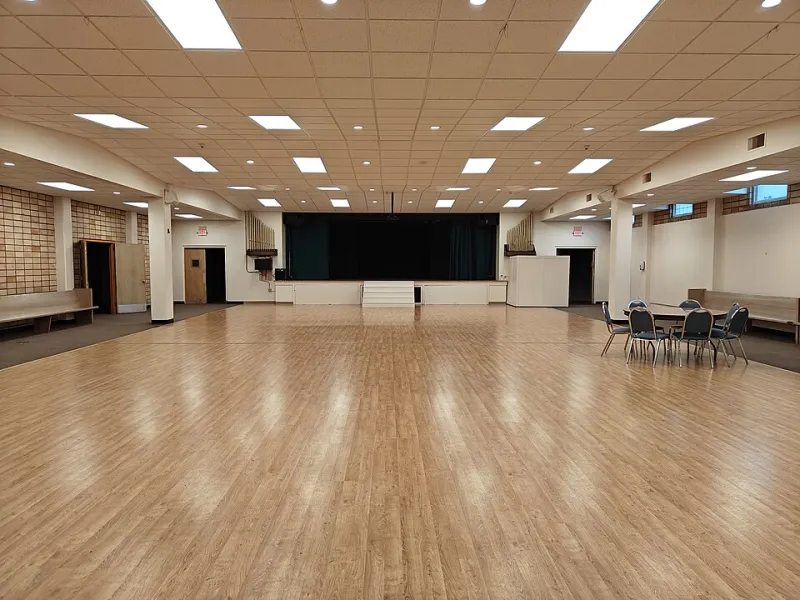
Photo: Chevsapher, CC0, via Wikimedia Commons
The first thing you notice is the smell. Burnt coffee, floor wax, and about forty years of potluck. Then the light — fluorescent and unforgiving, the kind that would send a museum registrar into early retirement. And then the art: a watercolor of somebody's late beagle, hung slightly low. A quilt with a political slogan stitched in red. A six-foot cardboard-and-chicken-wire angel that is either a masterpiece or a fire hazard, and possibly both.
This is the church basement art show. It happens in parish halls, fellowship centers, and Methodist gymnasiums in every state, usually in spring, usually with a bake sale at the back, almost never with a press release. Nobody calls it a biennial. But functionally, that's what it is — a recurring, locally curated survey of what a community actually makes when nobody is grading it.
The Room Where Nobody's Too Cool
Walk into a commercial gallery and you'll notice the silence first. The hush does a job: it tells you that art is a thing to be approached carefully, on tiptoe, in the right shoes.
The fellowship hall tells you something else entirely. There's a kid eating a cookie six inches from a pastel. A deacon is straightening a frame with his thumb. Somebody's grandmother is loudly explaining that she doesn't care for the abstract one, and the artist — who is standing right there, holding a paper plate of deviled eggs — agrees with her, mostly.
That lack of reverence isn't a failure of taste. It's an operating condition, and it does something to the work. Artists who show in these rooms know their audience by name. They know the guy who will squint at their painting and say, honestly, that he doesn't get it. There's no prestige economy to hide behind. You either made something that lands, or you made something that doesn't, and either way you'll be hearing about it at the coffee urn.
Why a Folding Table Beats a Plinth
The great lie of the white cube is that context is neutral. It isn't. A pedestal and a spotlight are an argument — a claim that an object is precious, separated, above the room.
A folding table makes the opposite argument. It says: this came out of a life. It's set next to somebody's jam jars and a sign-up sheet for the youth group's car wash, and it stands up fine. Scarcity breeds invention here. Without a budget for vitrines, organizers improvise: bedsheets stapled over the cinderblock to make hanging space, borrowed garment racks, a clothesline of small works strung across the stage, duct tape doing most of the structural engineering.
What that improvisation produces is a show with no hierarchy of medium. An oil painting and a crocheted blanket and a poem typed on index card stock and a jar of honey with a hand-lettered label all sit in the same room on equal footing. That's radical, and it's also just what a real community looks like.
The Rules Are Made of Duct Tape, and That's the Point
Organizers behind these shows have learned a few things the hard way, and they'll tell you straight.
First: keep the entry fee at zero or nearly zero. The moment you charge twenty-five dollars to hang a piece, you've filtered for people with twenty-five spare dollars, not for people with something to say.
Second: no juror, no prizes, or if you must have prizes, hand out a lot of them. Ribbons for categories nobody has ever heard of. Best Use of a Material Nobody Expected. Kids' Choice. A judge's award that is really just a neighbor saying they liked yours best.
Third: hang everything that arrives before the cutoff, even the weird one. Especially the weird one. The cardboard angel, the embroidered grievance, the seventeen-year-old's fourteen-panel comic about the school parking lot — these are why people walk down the stairs in the first place.
Fourth: label generously. Names, mediums, and a line about why the artist made it. Not a critical essay. A line.
What the White Cube Could Learn From the Bake Sale
Here's the part that stings. These rooms routinely pull a broader, more mixed-age, more genuinely local audience than galleries with actual budgets. There's no marketing campaign. There's a sign on the church lawn and a mention in the bulletin and a rumor that Carol's lemon bars are back.
Art institutions spend real money trying to solve the problem of the audience that never comes inside. The fellowship hall solved it by not building a wall in the first place. Refreshments, folding chairs, a table where you write your name, low stakes, an explicit invitation to bring your mother.
And there's a courage to it. A person who has never called themselves an artist will hang a painting in a church basement before they'll ever submit to a juried show. That first show is often the whole hinge of a creative life. Ask around and you'll find plenty of working artists who say the parish hall was where it started — a paper number taped under their work, someone's uncle saying, "Huh. That's good."
Bring a Dish, Bring Your Weirdest Work
The church basement biennial doesn't need to be elevated. It needs to be defended, and copied. If your town has one, go, and buy the lemon bars, and tell somebody their cardboard angel is doing something. If it doesn't have one, the bar for starting one is a room, a sign-up sheet, and a willingness to hang literally anything.
The most honest art show in America happens on folding tables, under fluorescent light, next to a plate of bars with plastic wrap on it. It has for decades. It will again this spring.