Paint the Block: How Ordinary Neighbors Are Turning Forgotten Walls Into Living Art
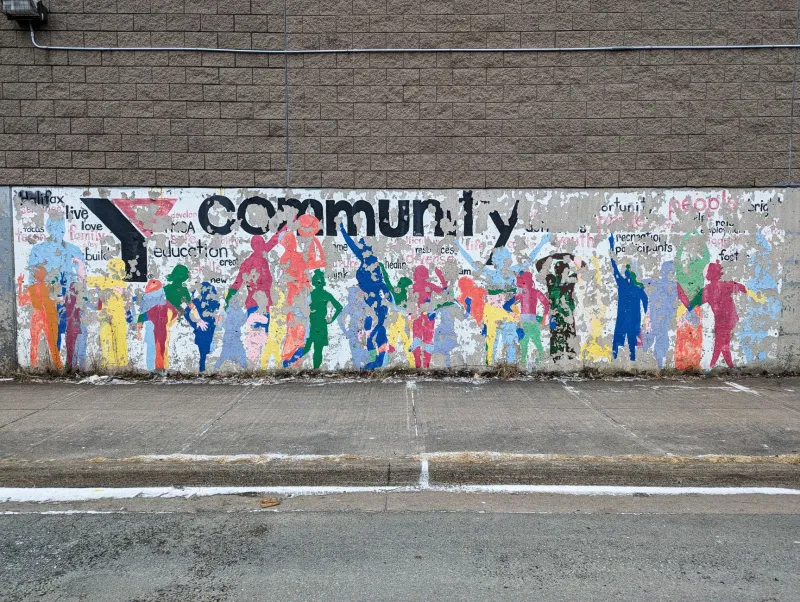
There's a wall in East Austin that used to be the color of resignation. Faded beige, tagged over, ignored by everyone who walked past it on the way to somewhere else. Then, one Saturday morning in early spring, a group of about fifteen people showed up with rollers, scaffolding borrowed from a neighbor's garage, and a design sketched out on a folded piece of notebook paper. By Sunday afternoon, that wall was telling the story of the neighborhood — in color, in faces, in the kind of unapologetic beauty that stops you mid-stride.
No grant. No city permit process that took eighteen months. No committee of stakeholders in a conference room deciding what the community "needed." Just people who lived there, deciding together.
This is happening everywhere right now, and it's one of the most genuinely exciting things in American public life.
The Movement Nobody Named
You won't find a single organization behind this wave of community-led public art. That's kind of the point. From Philadelphia rowhouse alleys to vacant lots in Fresno to the crumbling retaining walls along Detroit's east side, neighbors are collaborating on murals, tile mosaics, yarn installations, and sculptural assemblages without waiting for institutional permission or funding.
Artist and community organizer Marisol Treviño, who has helped coordinate several wall projects in her San Antonio neighborhood, puts it plainly: "We got tired of waiting for someone to make our block beautiful. The resources were already here — people who could paint, people who had ladders, people who had stories they wanted told. We just had to organize around what we already had."
What Marisol describes is a kind of creative mutual aid — the same logic that drives community fridges and tool libraries, applied to art-making. And it's producing work that, frankly, hits harder than a lot of what you'll find in a white-walled gallery downtown.
Why Walls? Why Now?
There's something about the post-pandemic moment that accelerated all of this. People spent a year and a half staring at their immediate surroundings, noticing what was neglected, ugly, or invisible. The hunger to transform public space became almost physical.
But the deeper roots go further back. The mural tradition in American cities — especially in communities of color — stretches from the Chicano muralism of 1960s Los Angeles to the Puerto Rican-led casita gardens of New York's Lower East Side. What's different now is the sheer geographic spread and the democratic, DIY toolkit that social media has enabled. Someone in Omaha can learn from what a collective in Oakland figured out about exterior paint durability. A teenager in rural Mississippi can find mentorship from a muralist in Chicago through Instagram DMs.
"The internet didn't create this," says Jerome Watkins, a self-taught muralist in Cleveland's Glenville neighborhood. "But it connected a bunch of people who were already doing it and feeling like they were alone."
What Actually Happens When a Neighborhood Makes Art Together
The logistics of a community wall project are more interesting than you might expect. Most start with a conversation — often at a block association meeting, a church, or just a group text chain. Someone identifies a wall whose owner is willing. Someone else floats a theme. Then comes the design process, which is where things get genuinely democratic and sometimes beautifully messy.
In Minneapolis's Phillips neighborhood, the Flores family opened their corner store's exterior wall to a community mural project last year. "We had three different design proposals," recalls community organizer Dana Okafor, who helped facilitate the project. "We ended up combining elements from all three, which meant the final piece looked like nothing any one person would have made alone. It looked like us."
That sense of collective authorship is something traditional art institutions struggle to replicate. When a gallery commissions a public piece, there's typically one artist, one vision, one signature. Community wall projects distribute the creative ownership across dozens of hands — and that distribution is reflected in how the neighborhood relates to the finished work.
Vandalism rates drop. Neighbors start cleaning up around the wall. People stop to photograph it. Kids point it out to their parents. The wall becomes a landmark in a neighborhood that maybe didn't have many.
The Gatekeeping Problem (And How These Projects Route Around It)
Let's be honest about what community art projects are often responding to: a traditional art world that has historically been very good at deciding whose stories get told and where. The gallery system, the public art commission process, the mural grant application — all of these have their place, but they also carry real barriers. You need a portfolio. You need connections. You need to write a proposal in the right language for the right committee.
For artists who are young, working-class, undocumented, or simply not plugged into the right networks, those systems might as well not exist.
DIY community art walls route around the gatekeepers entirely. The wall doesn't care about your MFA. The neighbors who show up on Saturday morning to help you paint don't need to see your artist statement. The work speaks, and the community decides if it speaks for them.
"I've had my work in community spaces that got more genuine engagement in one weekend than anything I ever submitted to a gallery," says Priya Nandakumar, a muralist based in Atlanta who has been part of several neighborhood art projects across the city. "People stop. They ask questions. They tell me what the image means to them. That conversation doesn't happen the same way inside a gallery."
Starting Your Own
If reading this is making you look at your own block differently, good. The barrier to entry is lower than you think. Here's the honest version of how most of these projects begin:
Find a willing wall owner — a neighbor, a small business, a church. Have a community conversation about what the space could say. Pull together whatever artistic talent exists in your circle; it doesn't have to be professional. Research your local permitting requirements (some cities require permits for murals; many don't for temporary installations). Source exterior-grade paint through donations, local hardware store partnerships, or small fundraisers. Show up. Paint. Let it be imperfect.
The imperfection, it turns out, is often the most honest part.
Art That Belongs to Everyone
There's a version of public art that exists to brand a neighborhood for incoming development — the cheerful mural that goes up right before the rents go up. Community art projects, when they're genuinely community-led, can be something different: an act of claiming, a declaration that the people who live here are the ones who get to decide what this place looks like.
That's not a small thing. In a moment when so many neighborhoods are watching their character get smoothed away by money from somewhere else, the act of painting your own wall is, in its quiet way, a form of resistance.
And it's beautiful. That matters too.