Polka at Dawn, Metal at Nine: Five Volunteer Radio Shows That Still Belong to Their Towns
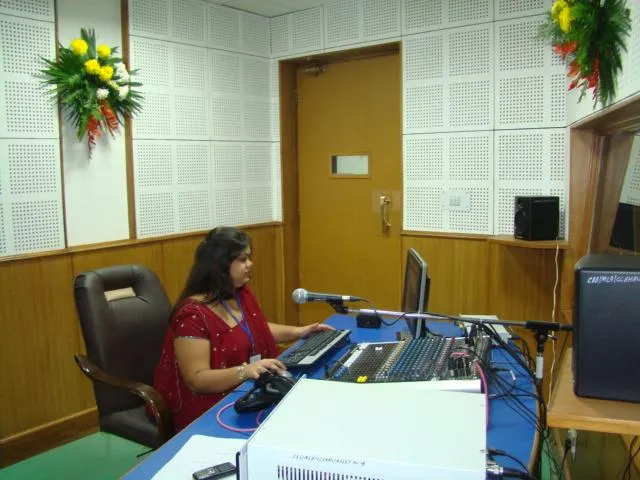
Photo: World Development Foundation, New Delhi, India, CC BY-SA 3.0, via Wikimedia Commons
Community radio shouldn't still work. The transmitter is a toaster with a license. The studio carpet is from a defunct bowling alley. The playlist is decided by a guy named Dale.
And yet: a few hundred watts of FM, or a streaming feed run out of a basement, can build an audience more loyal than anything a national network has managed in thirty years. Because what community radio offers isn't content. It's the sound of someone from your town, in real time, acknowledging that you both exist.
Here are five kinds of shows doing exactly that.
1. The Dawn Polka Hour
There is a stretch of the upper Midwest where Sunday morning belongs to accordion music, and it has for generations. The format is simple: an hour of polka, waltz, and button-box tunes, much of it requested by name, hosted by a volunteer who has been doing it since the 1990s and has strong opinions about which arrangement of a particular wedding standard is the correct one.
What makes it stick isn't nostalgia. It's function. The show is a bulletin board with a bass line. Anniversary announcements, fish fry reminders, a request dedicated to someone in the hospital. Elderly listeners call in and speak slowly, and the host lets them, and nobody edits it for pace.
Younger listeners show up too, often the grandchildren of the regulars, sometimes just people who moved to town and discovered that a polka hour is a surprisingly efficient way to learn who your neighbors are.
2. The Call-In Poetry Show
Once a week, in a small studio in Appalachia, a host opens the phone lines and asks people to read something they wrote. That's it. No guest authors, no critique, no theme.
What arrives is a genuine cross-section: farmers, nurses, a retired mine electrician, teenagers who have never read a poem aloud before, a woman who has been calling in every month for nine years. Some of it is very good. Some of it is a list of grievances. All of it is local in a way nothing published can be.
The host's rule is the best part: read it once, don't explain it. Callers routinely break the rule. The host lets them, because the explanation is often the actual poem.
3. The High-School Metal Block
Friday night, 9 to 11, a rotating crew of teenagers from the local high school runs a metal show on a station whose daytime programming is mostly classical and news. The school district owns the license. This is a negotiation that took decades to complete.
The kids pick everything, write their own station IDs, and interview local bands who have played exactly one show in a rented VFW hall. Occasionally a listener calls to complain about the screaming. Occasionally a listener calls to request more screaming. The advisor sits in the corner doing homework.
What the block has actually built is infrastructure. Bands get airplay before they have a demo. Kids learn to run a board, edit audio, and speak into a microphone without dying inside — skills that transfer directly into every job they'll ever have. And the station gains a listener base that will still be loyal in ten years.
4. The Swap Shop
Somewhere in every rural listening area there is a call-in buy-sell-trade program, and it is the closest thing American radio has left to a town square. Listeners call in with a wood stove, four tires, a litter of kittens, a set of golf clubs. The host writes it all in a spiral notebook.
It's easy to laugh at. It's also the most listened-to hour of the week. People tune in for the same reason they read the classifieds: to find out what's happening, what's for sale, and who's selling it. But there's a second layer. When a caller mentions a medical hardship, the next three callers happen to have something to give away.
Low budget, high trust. A local business underwrites the whole thing for the price of a used bicycle.
5. The Overnight Ranchera Show
From midnight to four, on stations serving farmworker communities in the West and Southwest, a host plays rancheras and takes calls from people working night shifts. The dedications are the heart of it — to mothers in other states, to people who died, to a daughter starting a new job on Monday morning.
The show functions as connective tissue for a community spread across hundreds of miles of agricultural land. It also, quietly, carries information: where to get vaccinated, where the food distribution is this week, how to reach a legal aid clinic. Nobody calls it a public service. It just is one.
How to Find Your Frequency
Community radio is not a nostalgia project. It's an active, underfunded, wildly local cultural venue, and it runs on people who show up at a building and talk to a machine, trusting that somebody out there is listening.
So find the small signal. The station with the rabbit-hutch studio and the bake-sale pledge drive. Call in, request something, dedicate a song to your uncle, read a poem badly and don't explain it. Low wattage, high loyalty — and it belongs to you in a way no algorithm ever will.