The Museum Hiding in Plain Sight: Ordinary Things That Remember Everything
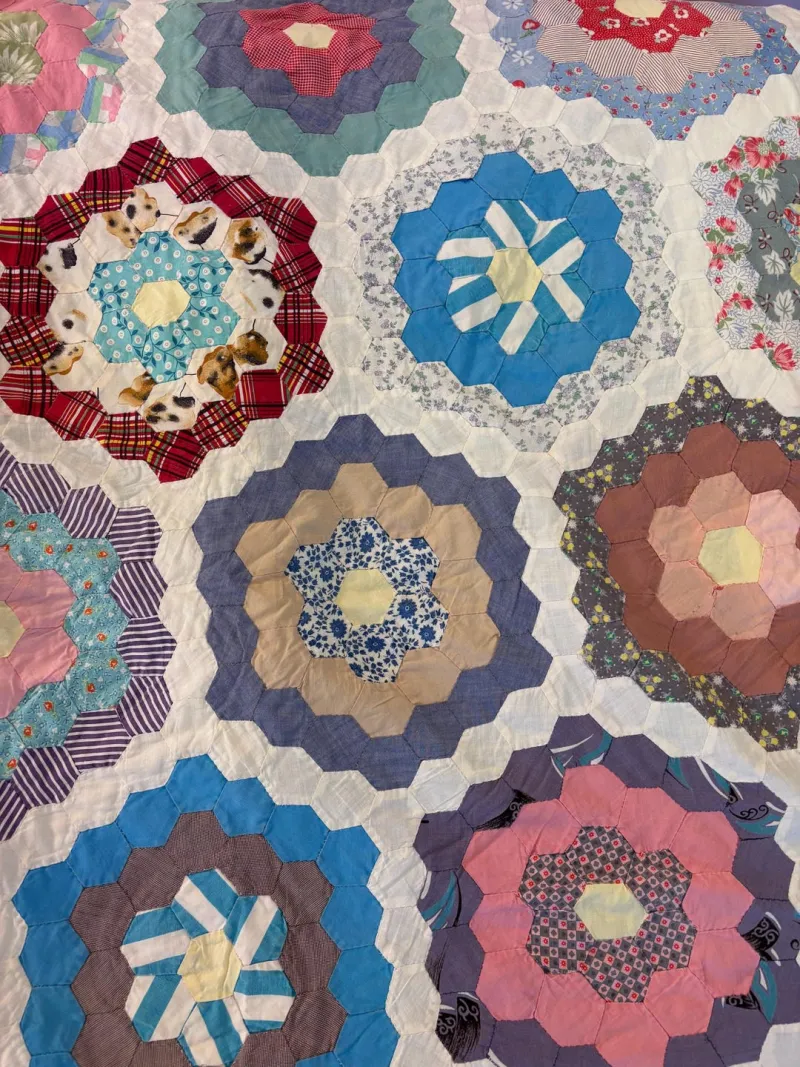
Photo: vintage quilt handmade grandmother closeup detail, via i.etsystatic.com
Every town has an official history — the centennial book, the historical society, the plaque by the bridge. But the real record, the one with the stains and the fingerprints on it, lives somewhere else entirely. It lives in objects. Ordinary, unarchived, deeply loved things that nobody ever thought of as history until you ask the right question.
Here are a few of our favorites, gathered from porches, diners, and basements across the country.
The Quilt on the Hope Chest
Ask a quilter about her fabric and she'll tell you who it came from. A dress worn to a 1962 wedding. Feed sacks from the farm that failed. Scraps from a son's first Halloween costume. Quilts are sewn biographies — every square a person, every stitch a date. When a grandmother's quilt gets passed down, it's not just warmth traveling through the family. It's a genealogy you can sleep under.
The Photo Wall at the Diner
The diner on the square has a wall of framed photos that no one remembers officially hanging. The 1978 flood. The championship team. Three generations of one family in the same booth. Restaurateurs rarely set out to be curators, but over decades those walls become the most-visited gallery in town — and unlike a museum, you can get hash browns while you're there.
The Trophy Case That Time Forgot
That dusty case in the school lobby isn't really about trophies. It's about the roster of every kid who believed, for one season, that the state tournament was possible. Read the nameplates closely and you'll find the town's doctors, its mechanics, its mayors — all of them fourteen years old once, all of them photographed in the same too-big jerseys.
The Church Recipe Book
Spiral-bound, plastic comb, sold for three dollars in 1984. The congregation cookbook is one of the last truly communal documents in American life. Every recipe carries a name, and every name carries a story — the casserole brought to the funeral, the pie that won the fair. Some of those cooks are gone now. The cookbook isn't. That's an archive, whether anyone calls it one or not.
The Barbershop Mirror
Not the mirror itself — the clippings taped around it. Little league photos, obituaries, a kid's first deer. The barbershop wall is a living scrapbook that updates itself, and the barber is its reluctant librarian.
The Hand-Painted Sign in the Barn
Farmers painted their prices, their politics, and sometimes just their names on barn roofs and fence boards. Most are faded now, but each one was a declaration: someone was here, someone had something to say, and they said it in letters big enough to read from the road.
The Front Porch Chair
It doesn't record anything, technically. But the specific chair on a specific porch — the one with the impression worn into the cushion — marks the spot where a hundred years of neighborhood news got exchanged. Some objects hold memory by being witness to it.
The Shoebox of Mixed Tapes
Before playlists, people made mixtapes for each other, and those tapes are emotional time capsules. A tape labeled "Summer — 1989 — for Deb" tells you more about a moment than a newspaper ever could.
Start Looking
The point isn't to be sentimental about old stuff. It's to notice that history doesn't wait for permission or funding. It accumulates wherever people gather and care. So the next time you're in the diner or the church basement, look up. You're standing inside a museum. It's just never had a sign.