Side A, Side B, and Everything in Between: The Independent Record Store as America's Last Great Third Place
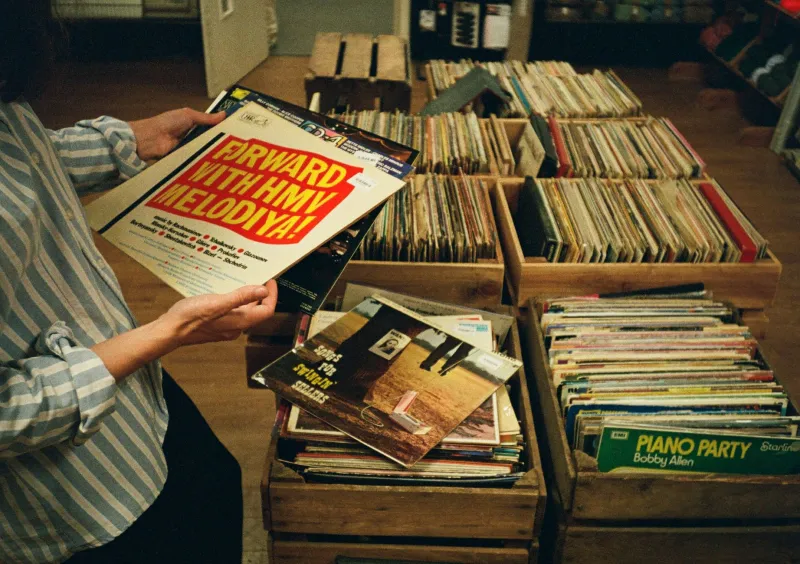
Let's be honest about what a great record store actually is. It's not a retail transaction. It's not a nostalgia trip, exactly, though nostalgia is certainly in the room. A great independent record store is something sociologists call a "third place" — not home, not work, but that irreplaceable somewhere-in-between where community actually happens. It's where you overhear a conversation about a band you've never heard of and end up buying an album that changes your life. It's where the person behind the counter knows your name and your taste and will argue with you, passionately and affectionately, about whether Joni Mitchell's Blue or Court and Spark is her definitive masterpiece.
And right now, across the United States, these places are not just surviving — they're thriving in ways that nobody predicted fifteen years ago when the music industry was busy announcing its own funeral.
The Numbers Don't Lie (And Neither Does the Crackle)
Vinyl record sales in the U.S. have increased for seventeen consecutive years, according to the Recording Industry Association of America. In 2023, vinyl outsold CDs for the second year in a row — something that would have seemed like pure science fiction in 2005, when iTunes was eating the music world alive. More than 40 million vinyl albums were sold in America in 2023 alone.
But the resurgence isn't just about the format. It's about what the format demands: intentionality. You have to choose a record, put it on, flip it over. You can't shuffle a vinyl collection the way you shuffle a Spotify playlist. That friction — that beautiful, deliberate friction — is precisely the point. In a culture drowning in content, the act of sitting down with a full album and actually listening to it feels almost radical.
Independent record stores have been the primary beneficiaries of this shift. Chains like Tower Records are long gone. What's left is a constellation of fiercely individual shops, each with its own personality, its own curatorial vision, its own community of regulars.
Portraits of a Scene
Take Guestroom Records, with locations in Oklahoma City and Norman, Oklahoma — not exactly cities you'd expect to find thriving vinyl culture, but there it is. Or Amoeba Music in Los Angeles, a genuine institution that has survived the digital apocalypse by doubling down on its identity as a cultural destination rather than just a store. Or the beloved Waterloo Records in Austin, which has been a cornerstone of that city's music scene since 1982 and hosts in-store performances that have become legendary in their own right.
What these stores share isn't size or location or even inventory — it's community orientation. They're places where things happen. Where local musicians get their first exposure. Where zines and show flyers and handmade art jostle for space alongside the records. Where the playlist playing on the store's turntable is itself a statement, a conversation starter, an invitation.
Denise Park has owned Spun Records, a small shop in Asheville, North Carolina, for eight years. She'll tell you straight up that she didn't open the store to get rich. "I opened it because Asheville needed a place where music people could just be," she says, leaning against a shelf of jazz imports. "We do listening parties, we do local band nights, we do swap meets. The records are almost secondary to the community at this point."
That's a sentiment you hear again and again from independent store owners. The vinyl is the hook, but the community is the reason people keep coming back.
Why This Matters Beyond the Music
There's something worth sitting with here, and it goes beyond the pleasures of analog sound. Independent record stores represent a kind of cultural infrastructure that our increasingly atomized, screen-mediated society desperately needs and rarely builds anymore.
When a local record store hosts a release party for a neighborhood band, it's doing something that no streaming algorithm can replicate: it's creating a shared experience in a shared physical space. When a shop owner hand-sells a record to a teenager who's never heard of the artist, they're transmitting cultural knowledge in a deeply human way. When regulars gather on a Saturday afternoon to dig through new arrivals together, they're building the kind of low-stakes, high-value social connection that researchers say is increasingly rare and increasingly essential to mental health and civic life.
In that sense, your local record store isn't just a place to buy music. It's a public good.
How to Support — or Start — Your Own Local Shop
If you're lucky enough to have an independent record store in your area, the support formula is simple: shop there. Not just on Record Store Day (though yes, absolutely on Record Store Day). Shop there on regular Tuesdays. Buy gifts there. Bring friends who've never been. Attend events. Follow them on social media and actually engage. These stores run on tight margins and genuine love — your patronage is the thing that keeps the lights on.
If your community doesn't have one, or lost one, the idea of starting a record store might feel daunting but isn't impossible. A few things worth knowing:
Start small and community-first. Some of the most successful indie stores began as pop-ups or monthly markets before finding permanent homes. Test the concept, build the audience, then commit to the space.
Curate with a point of view. You can't out-inventory Amazon or eBay. What you can do is create a selection that reflects your community's taste and tells a coherent story. Specialization is your friend.
Build the programming from day one. In-store performances, listening sessions, local artist showcases, vinyl swap meets — these events are what transform a shop into a destination. Budget time and energy for them even before you feel financially stable.
Connect with the network. The Coalition of Independent Music Stores (CIMS) and the National Alliance of Independent Record Stores (NAIRS) offer resources, buying power, and community for new shop owners. You don't have to figure it all out alone.
The record is still spinning. And honestly? It sounds better than ever.
Bonnie Clac loves a good record store story. Got a favorite indie shop we should know about? Tell us — we're all ears.